1. INTRODUCTION
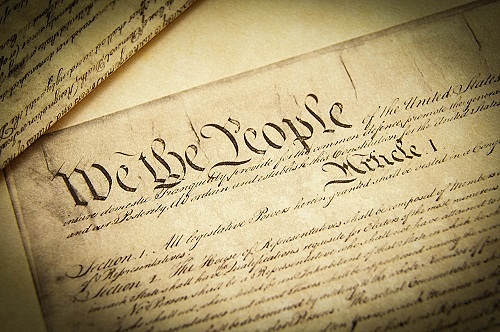
The US Constitution was drafted at the Constitutional Convention (also called the Federal Convention) held in Philadelphia. The event took place from May to September 1787. Delegates from each of the 13 states met there to revise the weak Articles of Confederation. They ended up creating a whole new government structure. Key figures like James Madison (Father of the Constitution) and George Washington (President of the Convention) led the effort.
The delegates understood their English legal heritage. They understood England’s “unwritten constitution,” based on centuries of customs, rights, common law, and act of the king and Parliament. Some elements of England’s constitution were ignored by the king. They were also sometimes violated because there was no written guarantee that the king must obey them.
The delegates also knew how their colonial governments had evolved. They progressed from royal charters and land grants to achieving a degree of self-rule. Most of the delegates had been involved in preparing their own state constitutions. These first state constitutions are one of the most important sources for understanding the U.S. Constitution and the Bill of Rights.
Four colonies adopted constitutions before the Declaration of Independence. After the Declaration of Independence all the colonies called themselves state of the United States of America. On January 5, 1776, New Hampshire adopted the first state constitution. Massachusetts was the last of the states to write and adopt its first constitution. John Adams wrote most of Massachusetts’s constitution. It was ratified in 1780 and remains the world’s oldest written constitution still in effect.
All the states accepted the idea that the powers of government originally came from the people. Based on popular sovereignty, each state created a “republican” for of democracy. In a republican democracy (republic), representatives who make the laws are elected by voters.
2. STATE CONSTITUTIONS
2.1 OVERRIDING PRINCIPLES
In 1748, France’s Baron de Montesquieu wrote The Spirit of the Laws. He described a “separation of powers.” This included a legislature that makes the laws. An executive enforces the laws. A judiciary interprets the laws. He used as his example the English system of king, parliament, and courts. Most of those involved in preparing their state constitutions were familiar with Montesquieu’s theory of the separation of powers. The states wanted to keep the three branches of government independent of one another. This was a way to prevent one branch from becoming too powerful.
2.2 BICAMERAL LEGISLATURE
The state constitutions assumed the legislature would be the most important part of the government. All but two states created bicameral (two-house) legislatures. In bicameral legislatures, the lower house is commonly called the house of representatives. It was the larger of the two and representatives served shorter terms. All “money bills,” those that deal with taxes and spending, had to originate in the lower house.
The upper house was often called the senate. Upper houses had full lawmaking powers, but could not initiate “money bills.” However, they needed to approve those bills. They also had to approve all other bills passed by the lower house before they could become laws. The upper houses conducted the trial of government officers who had been impeached (charged) by the lower house.
2.3 CHIEF EXECUTIVE
The state constitutions called their chief executive governor or president. In eight states, the legislature chose the chief executive. Most chief executives served one year. Most of the state constitutions greatly limited the powers of the chief executive. They feared the chief executive might become a tyrant.
2.4 JUDICIARY
The courts were the weakest branch of government in al the state constitutions. Judges in the state constitutions were appointed by the chief executive or the legislature, or by both. Some states limited the terms of the judges.
2.5 CHECKS AND BALANCES
“Checks and balances” were built into the first to limit the powers of government. The short terms were prevent lawmakers and chief executive from acquiring too much power. Bicameral legislatures pitted the lower against the upper house so neither could pass laws without the other’s approval. But there was no judicial check on the constitutionality of laws at this time.
2.6 BILL OF RIGHTS
Most state constitutions had written guarantees of rights. Americans considered these inalienable, natural rights. Maryland (1639) and Massachusetts (1641) were the first colonies to write bills of rights. These written rights limited the power of government far more than in England.
2.7 AMENDMENT PROCESS
Most of the states constitutions had a procedure amending their first state constitutions. Three of these states did this solely through the legislature. Four states required a constitutional convention. None of the state constitutions called for submitting amendments to the voters for ratification.
3. THE FEDERAL CONSTITUTION
The delegates arrived at the Philadelphia Constitutional Convention in 1787. They brought the basic building blocks from their own first state constitutions. In some cases, they brought elements of second state constitutions. These building blocks provided the basis for most of the debates at Philadelphia. But the state constitutions often differed over the specifics. The delegates had the advantage of witnessing their state constitutional governments in operation. The delegates were also aware of their English legal heritage.
