On December 5, 2025, the Supreme Court of the United States (SCOTUS) granted certiorari in Trump v. Barbara, the birthright citizenship case.
I. WHAT IS CERTIORARI?
Certiorari (Latin for “to be informed”) is a court order, or writ, from a higher court, like SCOTUS. It instructs a lower court to send up the records of a case for review. The SCOTUS grants certiorari to correct errors or clarify important legal questions. The SCOTUS grants petitions for certiorari for about 1-2% of cases. It is a discretionary decision, often to resolve conflicts between lower courts or settle legal issues. Granting “Cert” in layman terms means that the SCOTUS will hear the case on appeal.
II. PRESIDENT TRUMP’S EXECUTIVE ORDER LIMITING BIRTHRIGHT CITIZENSHIP
In January 2025, President Trump issued Executive Order (EO) 14160. The EO placed restrictions on birthright citizenship for children born in the United States. These are children born to parents who were in the country temporarily or without lawful status.
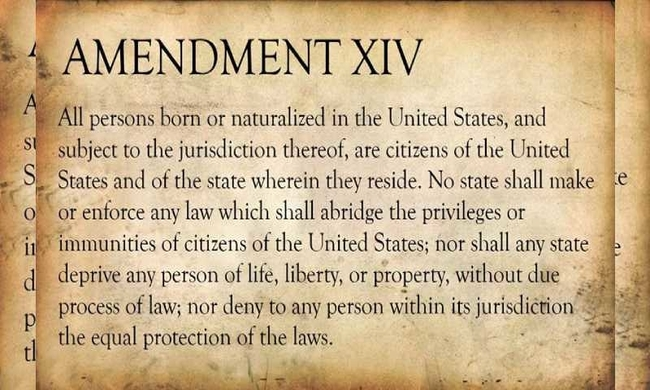
Trump’s executive order seeks to redefine how the Fourteenth Amendment‘s clause “and subject to the jurisdiction thereof” should be interpreted. The executive order applies to any child born in the United States whose parents do not have citizenship or permanent legal status. This includes, but is not limited to, parents with the following immigration statuses:
- When the mother was unlawfully present in the U.S. and the father was neither a U.S. citizen nor a lawful permanent resident when the person was born.
- People with humanitarian visas and pending applications, such as applications for U-visas, T-visas, and asylum;
- People with temporary protected status (TPS) and humanitarian parole;
- People who are Deferred Action for Childhood Arrival (DACA) recipients;
- People with student, work and family visas, such as H-1B (specialty occupation workers), H-4 (dependents of H1-B), H2-a (temporary agricultural workers), F-1 (students), J-1 (exchange visitors), L-1 (intra-company transferees), L-2 (dependents of L-1), O-1 (extraordinary ability), and P-1 (athletes and entertainers);
- People with tourist visas, such as B-1 (business visitors) and B-2 (tourists);
- People without any immigration status.
The executive order specifies that these provisions are only effective for certain individuals. These individuals must be born 30 days or more after the date of the order. It would have only applied to children born beginning February 19, 2025, had it not been blocked by an injunction. After the Supreme Court lifted the block, the order was set to go into effect on July 27, 2025. But it was blocked by an injunction again on July 10.
III. HOW THE CASE GOT TO SCOTUS
At the trial court level, a federal district court judge in New Hampshire issued a preliminary injunction. The judge also issued a temporary restraining order. This injunction barred the Trump administration from enforcing the EO. A preliminary injunction means that the EO may not be enforced until the legality of the EO is fully litigated.
Federal judges do not issue preliminary injunctions haphazardly. The burden to issue a preliminary injunction is high. A plaintiff must show by a preponderance of the evidence that he is likely to succeed. The plaintiff must demonstrate likelihood of success by demonstrating to the court how it proposes to prove its case. In this case, unborn children and other children were the plaintiffs.
IV. ARGUMENTS TO SCOTUS
In its petition for review, the Trump Administration claims that the 14th Amendment’s citizenship clause was adopted to confer citizenship only on newly freed slaves. This clause was also intended for their children. It was not meant, Trump argues, for the children of aliens temporarily visiting the United States or of illegal aliens. Trump claims that the challengers and the lower courts cannot rely on the court’s 1898 decision in Wong Kim Ark. It argues this because the parents in that case lived permanently in the United States even if they weren’t U.S. citizens.
Opposing review, the challengers countered. They argued that the Supreme Court has already decided what the citizenship clause means. This was determined more than a century ago in Wong Kim Ark’s case. But in any event, they wrote, in 1940 (and again in 1952) Congress enacted a federal law that essentially codified the citizenship clause, and it did so with Wong Kim Ark in mind, so that Trump’s executive order also violates federal law
V. HOW THE CASE WILL DEVELOP
On December 5, 2025, the SCOTUS granted the Trump administration’s petition for review in the Barbara case. The court also did not indicate that it intends to fast-track the Barbara case. This means that the justices will hear oral arguments in the spring. A decision will follow by late June or early July.
VI. ANALYSIS FORTHCOMING
I will provide an analysis of this case within the week. This is a straightforward case that should be against Trump.