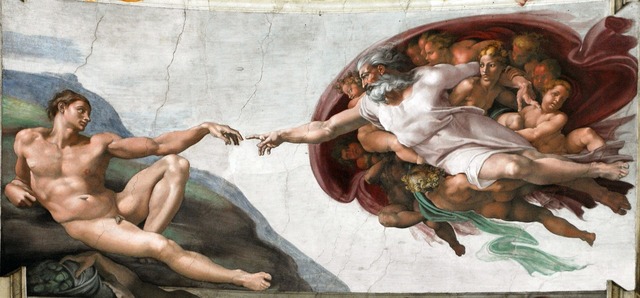
The Catechism of the Catholic Church summarizes the faith in four main parts: Profession of Faith (Creed), which explains the beliefs of the Church; Celebration of the Christian Mystery, which covers the liturgy and sacraments; Life in Christ, which teaches about moral living and commandments; and Christian Prayer, which focuses on the Lord’s Prayer and the spiritual life. It presents how Catholics believe, worship, live, and pray.
Part One of the Catechism of the Catholic Church (CCC), The Profession of Faith (26-1065), is for all intents and purposes divided into the following sections:
- Man’s Capacity for God (26-49)
- God Comes to Man (50-141)
- Man’s Response to God (142-184)
- The Creeds (185-197)
- God the Father Almighty (198-278
- Creation of Heaven and Earth (279-354)
- Man in God’s Image (355-421)
- Jesus Christ, His Only Son Born of Mary (422-483)
- Conceived by the Holy Spirit (484-570)
- Suffered, Crucified, Died and Buried (571-630)
- Descended into Hell and Rose on the Third Day (631-682)
- The Holy Spirit (683-747)
- The Catholic Church (748-810)
- The Church is One, Holy, Catholic and Apostolic (811-870)
- Christ’s Faith and the Communion of Saints (871-987)
- Resurrection of the Body and Life Everlasting (988-1065)
Called to Search for God (27-28)
This entry will focus on Man’s Capacity for God. God has placed a desire for Himself in every person. Man is called to speak with God and be in communion with God (Second Vatican Council).
Inhibiting Factors (29-30)
While man has free will, many factors affect man’s ability to seek and find God. These factors include ignorance, evil, desire for riches, bad example, teachings hostile to religion, original sin, and others. God still calls man to seek him (grace). We are unhappy until we are in communion with God. “You have made us for yourself, and our heart is restless until it rests in you.” (St. Augustine, Confessions).
Proofs for God’s Existence (31-33)
Man can know and find God by reason alone. Proofs for God’s existence come from arguments which converge, convince and provide ways for man to know God. These proofs are found in the physical world and man’s inner world.Man is endowed with a sense of moral goodness. By his conscience, man asks about God’s existence. This shows that man has a spiritual soul (the seed of eternity) which comes directly from God.
So the world and the human person can begin to exist, they must participate in a Being Who has no origin and no end. The person must realize that the goal of human existence is God himself.Man can reason to the existence of a personal God. However, God has also chosen to reveal himself. Rational proofs can show that revealed truths are not opposed to reason.
Reason’s Power and Limits (36-38)
Man, by reason alone, can know that God exists through the created world which God has made (First Vatican Council). Therefore, man can accept God’s revelation.
However, serious obstacles exist. First, religious truths cannot be seen. Second, religious truths demand self-sacrifice. Third, man experiences inner disordered appetites. Man is easily persuaded to consider as false what he does not want to acknowledge as true (Pius XII – Humani Genesis).
Therefore, man needs revealed truths, even those which man can grasp by reason (such as God’s existence).
The Limits of Human Language (39-40)
The intellect (unaided by the Bible) can grasp some truths about God. Therefore, a dialogue with all peoples (atheists, philosophers, etc.) is possible.
Yet, we are limited and can speak about God only with human language.
Describing God (41-43)
We begin to describe God according to his creatures (which reflect his goodness).
We also “purify” our language because human words fall short in describing him.
Although limited, our language can still attain to God (sometimes expressing only what God is not).
Leave a Reply