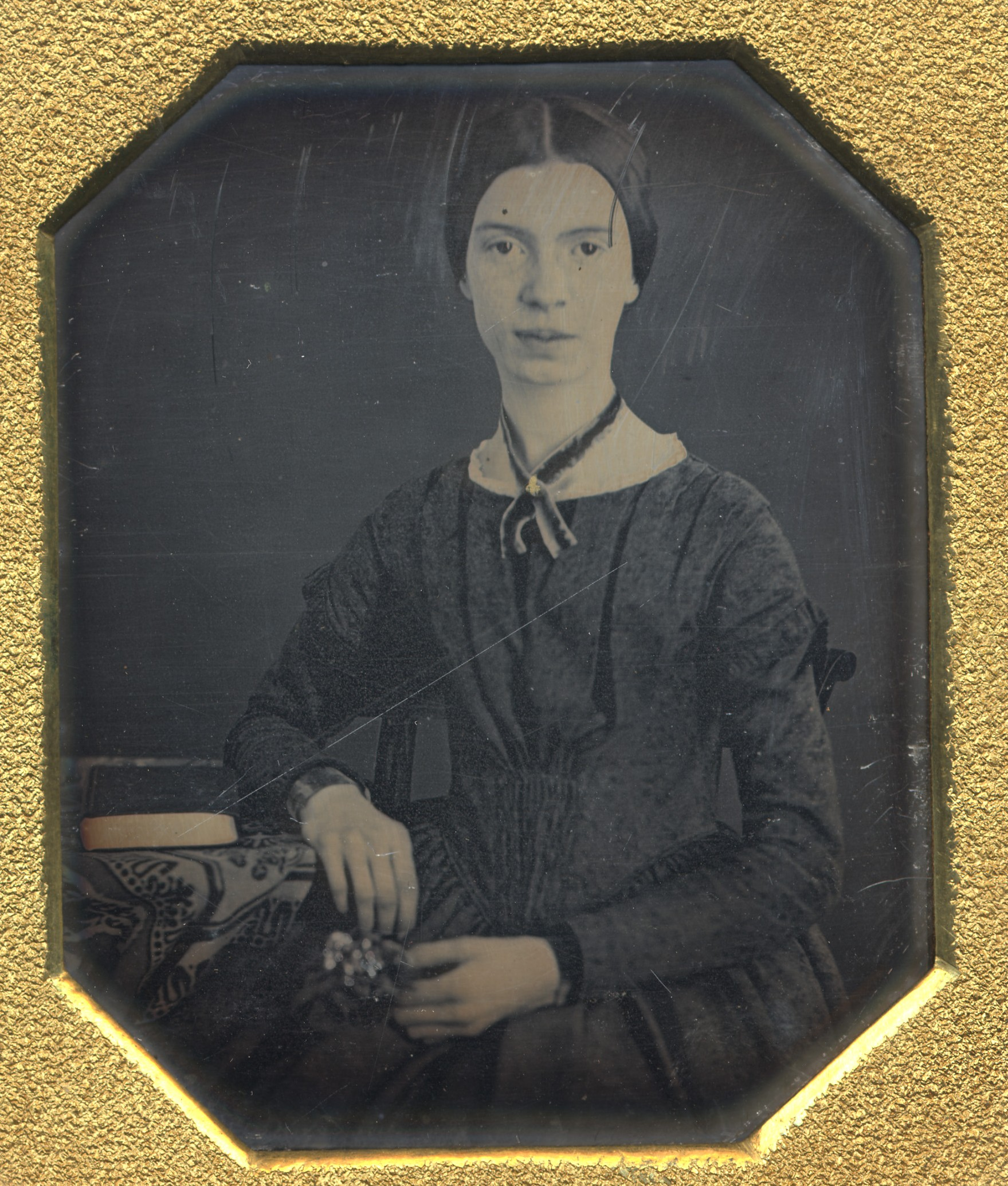
I would like to begin our journey to understanding, reading, and writing poetry with an ars poetica poem, that is, a poem that takes the craft of writing poetry as its subject. Ars poetica poems often explain the poet’s opinion on what a poem should be, how it would be written, and what the poem should do. I have chosen Emily Dickinson’s poem, “Tell all the truth but tell is slant.”
Emily Dickson was born in Amhert, Massachusetts, on December 10, 1830. Her father was a lawyer and politician, serving as a representative from Massachusetts to the U.S. Congress from 1852 to 1855. Emily had three siblings. All attended Amherst college. Emily Dickinson is commonly considered one of America’ greatest poets.
So, let’s get started. Here is Emily Dickinson’s poem, “Tell all the truth but tell it with slant:”
Tell the truth but tell it slant –
Success in Circuit lies
Too bright for our infirm Delight
The Truth’s super surprise
As Lightning to the Children eased
With explanation kind
The Truth must dazzle gradually
Or every man be blind –
One of our first questions after we read a poem is to ask ourselves, “What is the speaker trying to say?” In a way, part of the message in Dickinson’s poem is simple. Dickinson is saying the best way to get at the truth is to do so indirectly and not all at once. If you try to tell the truth directly and everything at once, it is often misunderstood or it blinds people or stuns people. The best way to get the truth across to someone, Dickinson seems to be saying, is to approach it indirectly and tell it piecemeal so as not to blind anyone.
For Dickinson, moreover, the truth must be told allegorically, or symbolically, or both. Adults must tell the truth to their children, but it must be mediated out of kindness and necessity to those as yet too young or inexperienced to feel truth’s full power. According to Dickinson, the truth would make “every man be blind” if it is not told gradually through symbolic or allegorical statement.
But Dickinson does not stop with children. Similar to easing idea of lightning into the mind of children, Dickinson proposes to ease the lightning of truth for adolescents (students) and adults, those of us who are not children, to ease the “Lightning” strike of truth into her readers’ souls by an explanation that is told through allegory, symbolically, or some other way so that the truth is mediated for us. Dickinson’s claim to “tell the truth but make it slant” suggests that a poet may tell only part of the truth, the part that is acceptable her audience and thus requires restraint by the poet. That is the basic message of the poem.
We will discuss Dickinson’s poem more tomorrow. In tomorrow’s post, we will discuss the structure of this poem. So, for now, enjoy the message, rhythm, and sound of this wonderful poem and contemplate its message.
I hope you enjoyed this post. Please let me know if you would like too discuss this more in-depth or discuss something else. See you tomorrow!
Ben Crittenden